
Understanding how an accident happened is essential to assessing liability. Investigating its circumstances can provide clarity when accounts differ.
Request an assessmentFree advice, with no upfront costs
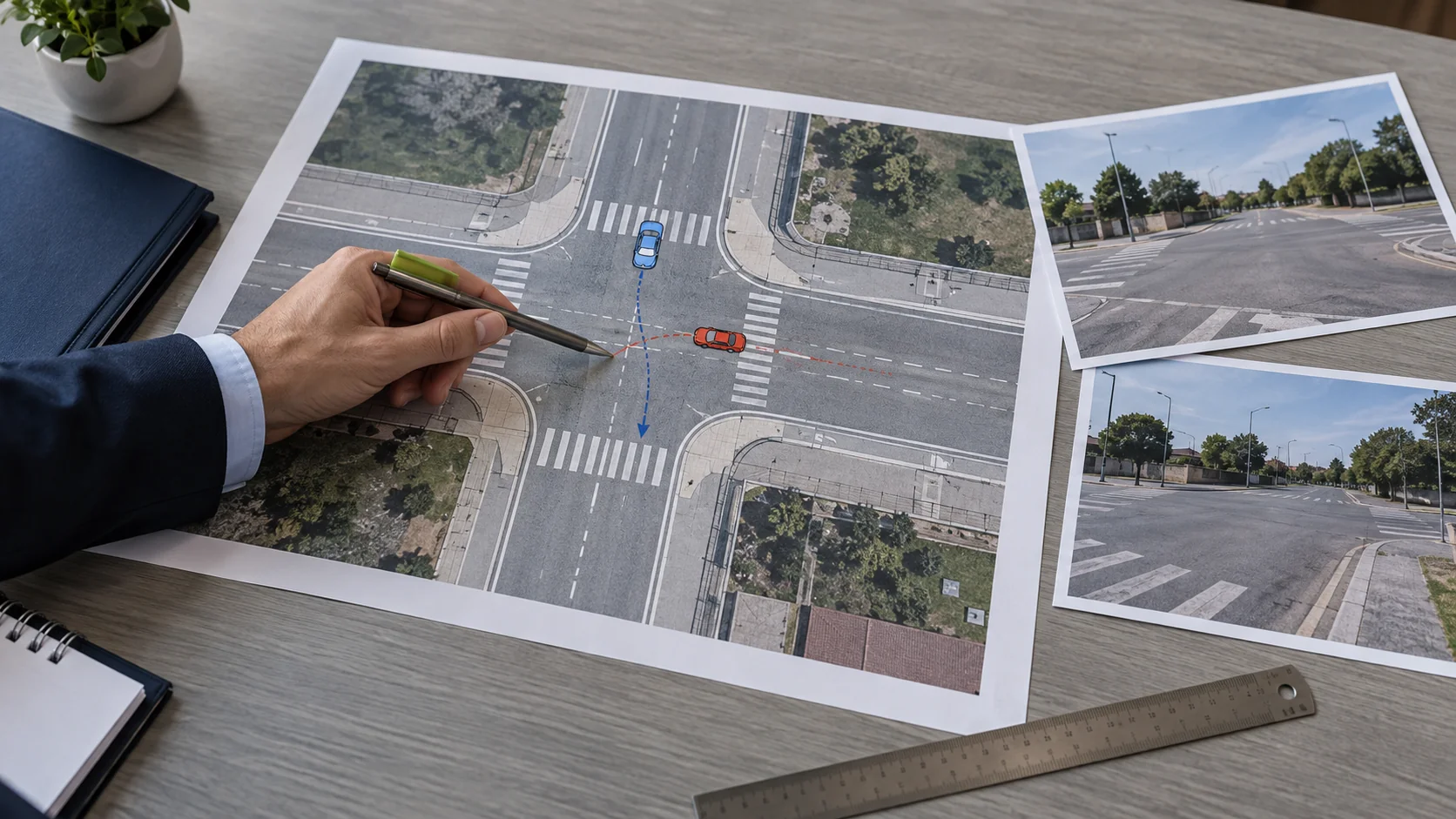
Why the circumstances affect compensation
Assessing damage must go hand in hand with assessing liability. Vehicle positions, impact points and the sequence of manoeuvres can help establish who caused the accident and whether liability is shared. We discuss this in our article on shared liability in road accidents.
Which evidence can be examined
- Available reports, measurements and findings from the authorities that attended.
- Photographs of the road, signs, vehicles and damage.
- Witness accounts, final positions and features of the location.
- Any video footage and recordings, assessing whether they can be used and what they mean in context.
Consistency between these elements is more useful than a single isolated photograph. For in-vehicle devices, see our article on dash cams in cars and on motorcycles.
When an accident reconstruction is useful
Infortunistica Antoniana assesses with the client whether further investigation of the accident is needed, gathering useful documents and available findings. The aim is to understand the sequence of events and its effects on the compensation claim.
Not every accident requires the same level of analysis. Further investigation can be particularly useful where accounts conflict, liability is disputed, or there are serious injuries or fatalities.
Evidence should be preserved promptly
Photographs and witness details may become difficult to obtain over time. Preserve the evidence already available and mention any possible recordings, without altering files or documents. We help you understand which information may be useful for the claim.
The real cases discussed in our articles include left turns and interference with traffic. For an overview of the process, visit our page on road traffic accidents.
